

Everyday Objects, Extraordinary Perceptions
The strangest optical illusions are sometimes not produced by artists, scientists but by the objects and places we see. Even pictures of things in our daily life can completely mislead the brain into thinking that there is something there when there is actually not: such as a dog fit to snug itself into a blanket of bear prints, or when the picture of the streetlights makes a car look like it has huge cartoon eyes on it. These unintentional illusions, which are usually taken by chance, result in the double takes and viral moments on social media, those who watch them without knowing whether their eyes are deceiving them or whether some magic has been employed.
Classic Illusions: The Café Wall and Hermann Grid
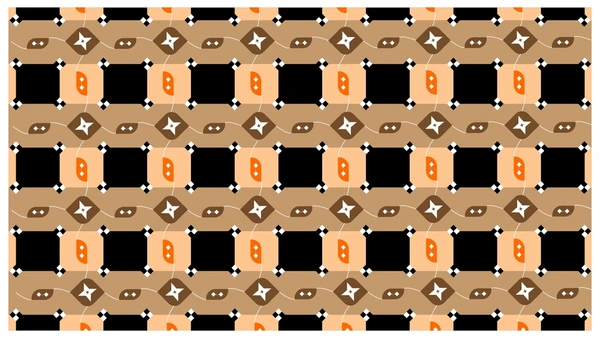
Certain illusions remain with time as they always make viewers perplexed. The illusion of the Café Wall causes straight lines between staggered black and white blocks to look violently distorted, all due to perception of contrast and spacing by our brains. The Hermann Grid illusion is a relatively simple illusion that was discovered more than a century ago and is explained by a set of simple lines and squares making the illusion of ghostly black dots that disappear when you attempt to focus on them. Both of them work since our visual system is attempting to make up high contrast, which results in sensations which do not exist.
Impossible Shapes and Phantom Figures
One of the classics of mind bending art, impossible shapes such as the Penrose triangle or the Escher cube make images that the brain is hellbent to understand, despite having no possibility of existing in three dimensional space. Likewise, the Kanizsa triangle illusion makes you believe that there is a bright triangle where there is none, and your brain takes it upon itself to fill in the shape, depending on the positioning of the gaps and angles. Ambiguous images such as the rabbit-duck illusion compel the brain to alternate between two possible answers, which is equally plausible, and viewers find it difficult to perceive both options simultaneously on the same photograph.
Moving Images Without Motion
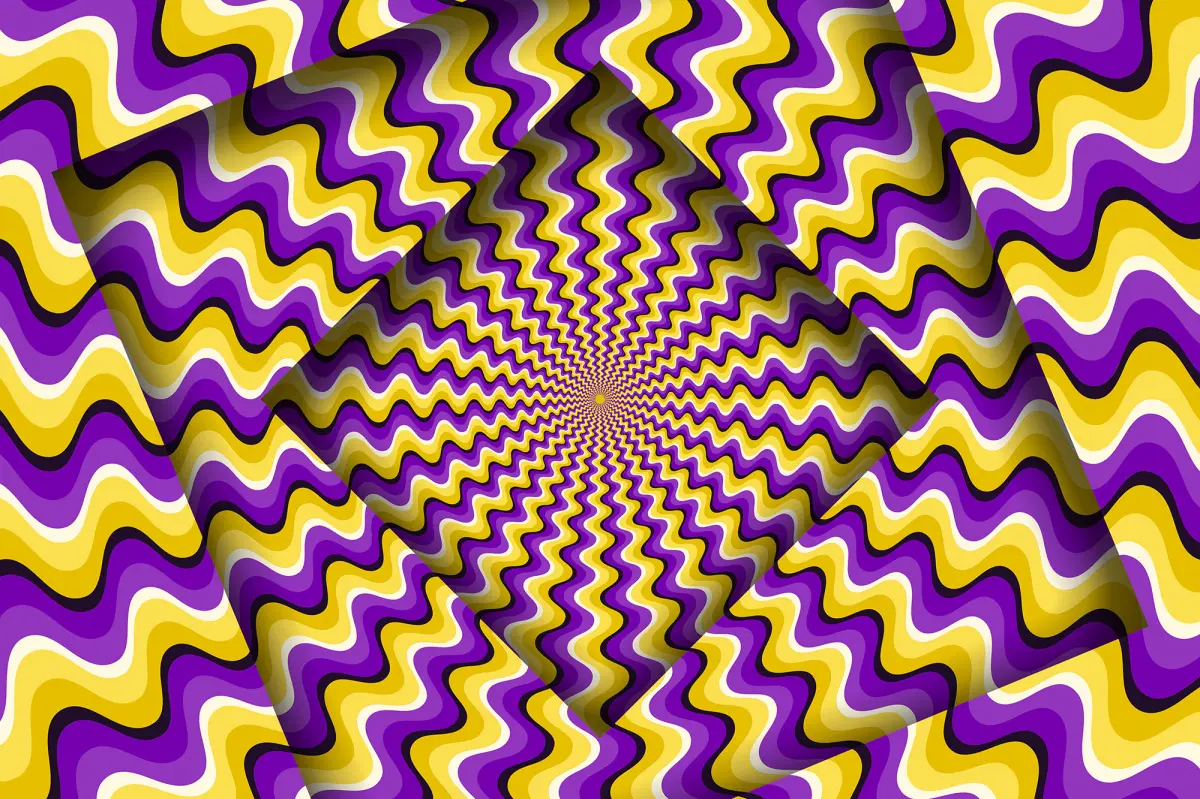
Among the most disturbing types of illusion, there are the ones that seem to move, despite being in their absolute immobility. The Rotating Snakes by Kitaoka, or the illusion of a hypnotic circle or any other design play on the brain and eye reaction to contrasting shapes and colors in your peripheral vision to create an illusion of swirling motion. Such illusions are so good that at times individuals need to look away to refresh their eyes and assure oneself that there is nothing truly turning.
Illusions in Nature and Everyday Life
Not everything is a man-made illusion. The angle of the light, the reflection, and odd shadows sometimes can form the image of a floating ship or an object, which breaks the laws of physics. The illusion of the lunar terminator, when the shadows of the moon cause the light of day to reach the opposite side, even that makes us remember that nature has a rogue side in all respects of perception.
Conclusion
The optical illusions created by artists or brought into being by coincidence are the windows in the remarkable methods which our brain uses to perceive the world. These are visual puzzles that push our buttons, entertain us and occasionally our perception of reality, which reminds us that what we observe cannot always be as simple as it appears.